WTO Talks Deadlock as Brazil Blocks E-Commerce Duty Deal
Deadlock in WTO Talks Over E-Commerce Moratorium
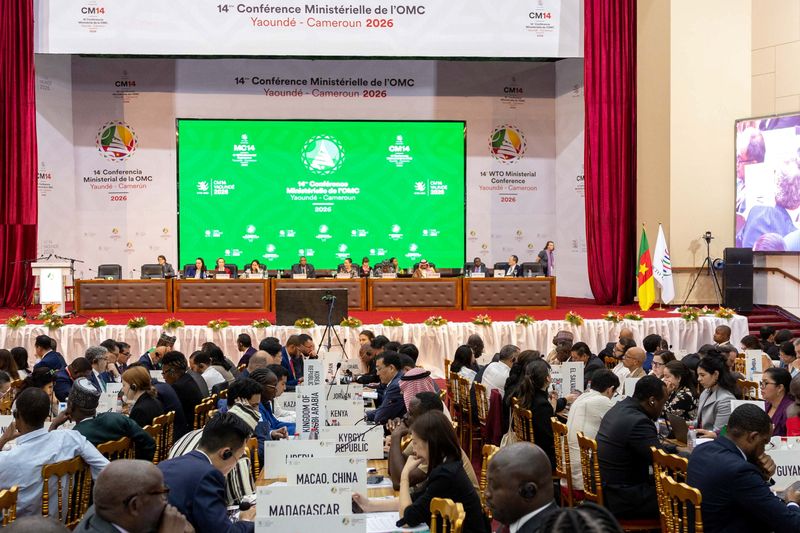
The World Trade Organization (WTO) talks concluded with a deadlock on Monday as Brazil refused to support an extension of the moratorium on customs duties for electronic transmissions, such as digital downloads. According to diplomats, this decision by Brazil blocked the U.S. and other countries from securing an extension. The e-commerce moratorium, which had been in place, has now expired, allowing countries to impose duties on electronic goods. However, WTO Director-General Ngozi Okonjo-Iweala expressed hope that the moratorium could be reinstated, noting that Brazil and the U.S. were working toward an agreement.
Progress Made on WTO Reform
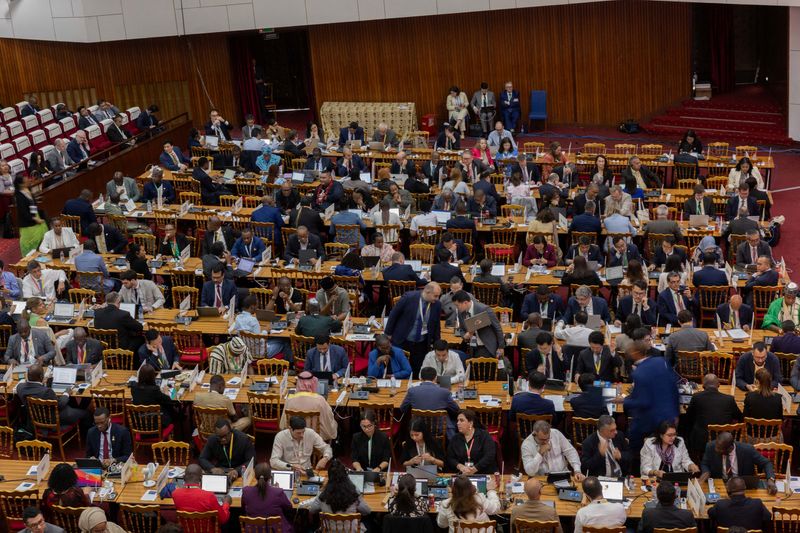
Despite the impasse on the e-commerce moratorium, the marathon talks held at the WTO meeting in Cameroon made progress on drafting a comprehensive reform plan for the organization. Although agreements are still pending, the discussions marked a step forward in addressing the challenges facing the WTO. The conference chair, Cameroon Trade Minister Luc Magloire Mbarga Atangana, announced that the talks would continue in Geneva, with plans for meetings expected in May, according to WTO officials.
These talks were seen as a crucial test for the WTO’s relevance following a year of trade disruptions and turmoil caused by the conflict in Iran. However, ministers failed to reach a consensus on extending the moratorium beyond two years due to objections from Brazil. This failure was described as a “major setback for global trade” by Britain’s Business and Trade Secretary Peter Kyle.
U.S. Seeks Permanent Extension
Diplomats had spent the weekend attempting to bridge the gap between Brazil, which initially sought a two-year extension, and the U.S., which aimed for a permanent extension. A proposed document outlining a four-year extension with a one-year sunset clause, concluding in 2031, was drafted. However, Brazil later suggested a four-year extension with a review clause halfway through, which was not supported by all parties, according to two diplomats.
A U.S. official stated that Brazil had opposed a “near-consensus document,” emphasizing that the disagreement was not solely between the U.S. and Brazil but involved Brazil and Turkey against 164 members. A Brazilian diplomat countered by saying that the U.S. had “wanted the sky,” while Brazil preferred a more cautious approach, seeking a two-year renewal similar to previous ministerial conferences.
“The U.S. wanted the sky,” the Brazilian diplomat said, highlighting concerns about the unpredictability of e-commerce in the next few years and its impact on national policies. Another diplomat noted that U.S. Trade Representative Jamieson Greer had made delegates “uncomfortable” by suggesting there “would be consequences” if the U.S. did not secure a long-term extension.
Business Leaders Express Concern
Business leaders voiced their disappointment over the outcome of the talks in Yaounde. International Chamber of Commerce Secretary General John Denton called the result “particularly concerning at a time of real strain on the global economy.” Microsoft’s director of customs and trade affairs, John Bescec, stated that businesses were expecting more certainty and predictability, but instead, they received the opposite.
Securing a deal on the e-commerce moratorium was seen as essential for maintaining U.S. support for the WTO. Under President Donald Trump, the U.S. had withdrawn from global multilateral institutions, making this issue even more critical.
Draft Reform Plan Takes Shape
A new draft of a reform roadmap, reviewed by , outlines a timeline for progress and identifies key issues to address. Diplomats reported that this draft was close to being agreed upon in Cameroon. The plan includes improving decision-making in the consensus-based system, which has often been stalled by a few countries, and ensuring that developing countries benefit from trade policies.
A declaration on reform will also be sent to Geneva for further discussion, according to WTO conference chair Mbarga. The reform debate comes amid efforts to revise WTO rules to increase transparency in subsidy use and streamline decision-making processes. The U.S. and European Union argue that China has taken advantage of current rules to its own benefit.
