The One Drink to Order in Vietnam—It Tastes Like Liquid Tiramisu
The Origins of Egg Coffee in Hanoi
Born from a milk shortage in 1946, egg coffee remains a symbol of Vietnamese ingenuity. This unique beverage has become an iconic part of Hanoi’s culture, offering not just a taste of the city but also a story of resilience and creativity.
Vietnamese coffee needs little introduction. But in Hanoi, there’s one variation that rises above the rest—both for its flavor and its story: egg coffee. According to Tran Duc Thang, the head barista at Capella Hanoi, egg coffee can be found almost anywhere, even outside Vietnam. However, the real experience is tied to a very specific feeling—the moment you slow down, sit still, hear the hum of a busy morning street, and hold a warm cup in your hands. It’s the contrast between chaos and calm.
A Rich History of Coffee in Vietnam
Coffee first arrived in northern Vietnam in the late 19th century, when French missionaries introduced Arabica plants during the colonial era. What began as a modest agricultural import evolved into one of the world’s most distinctive coffee cultures. By the 1880s, cafés had begun appearing across Hanoi, with early accounts describing Parisian-style coffeehouses lining what is now Trang Thi Street. Initially the domain of French officials and elite Vietnamese, these cafés soon became part of daily life.
As coffee culture took root, it adapted. Fresh milk was scarce, leading to the widespread use of sweetened condensed milk—and the creation of cà phê sữa đá, Vietnam’s now-iconic iced coffee found within the country and across the globe.
The Birth of Egg Coffee
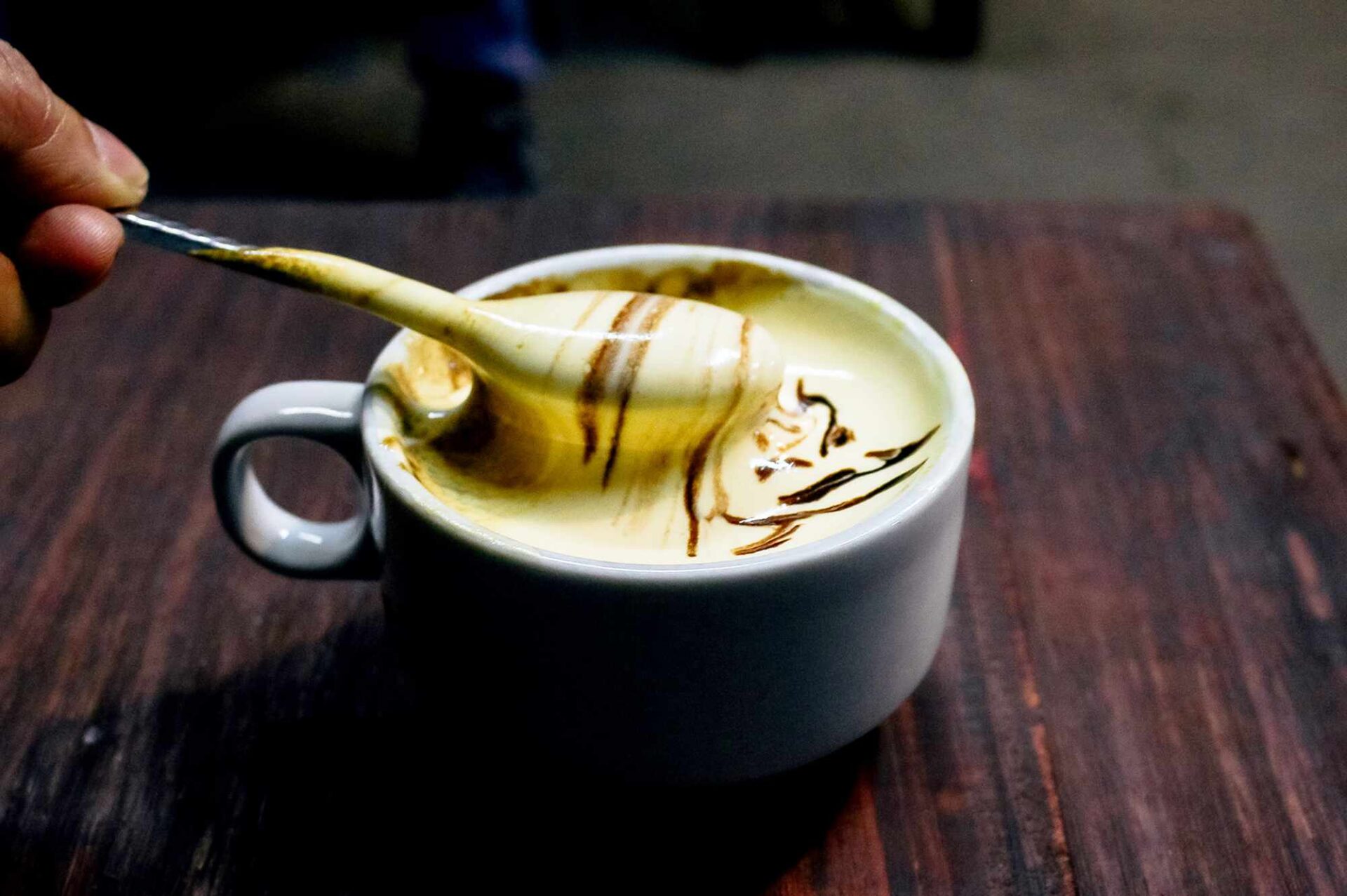
In Hanoi, however, scarcity sparked something even more inventive. In 1946, bartender Nguyễn Văn Giảng is said to have created egg coffee during a milk shortage. By whisking egg yolk with sugar and condensed milk, he produced a thick, velvety foam layered over strong, dark coffee. The result is rich and unexpectedly balanced—something like cold foam, with a silky, custard-like top that is often described as “liquid tiramisu.”
This innovative drink not only satisfied the cravings of coffee lovers but also became a symbol of adaptability and resourcefulness. As Hoàng Tùng, the Hanoian chef behind the acclaimed restaurant T.U.N.G Dining, explained, “The significance of egg coffee in Hanoi is not just about taste, but about mindset. It represents resilience.”
Exploring Vietnam Through Its Cuisine
For those looking for a food-focused trip, Abercrombie & Kent’s “Vietnam: Cultural and Culinary Adventure” offers an eight-day journey from Hanoi to Ho Chi Minh City. This trip blends sightseeing with immersive food experiences, including street-food tastings, cooking classes, and Michelin-starred meals. Along the way, travelers cruise through Ha Long Bay and explore the Mekong Delta while discovering Vietnam’s history, landscapes, and vibrant cuisine.
Enjoying Egg Coffee the Right Way
Traditionally, the egg topping was whisked entirely by hand—a process that could take up to 30 minutes. Today, modern equipment has streamlined the technique, but the ritual and flavor remain intact. For a classic cup, Tran recommends local institutions like Cafe Giang, along with C.O.C Legacy Specialty Coffee, Cong Caphe – Nha Tho, and of course, Diva’s Lounge in Capella Hanoi.
There’s even a ritual to drinking it. Some locals suggest starting with a sip of the coffee as served, allowing the bitterness of the brew to contrast with the airy sweetness above before stirring. Tran, however, prefers the opposite approach: “Sip the cream first,” he said. “It lets you understand both layers before they come together.”
Ultimately, there’s no single correct way. “The best way,” Tran said, “is simply the one that feels right to you—and taking the time to enjoy it.”
