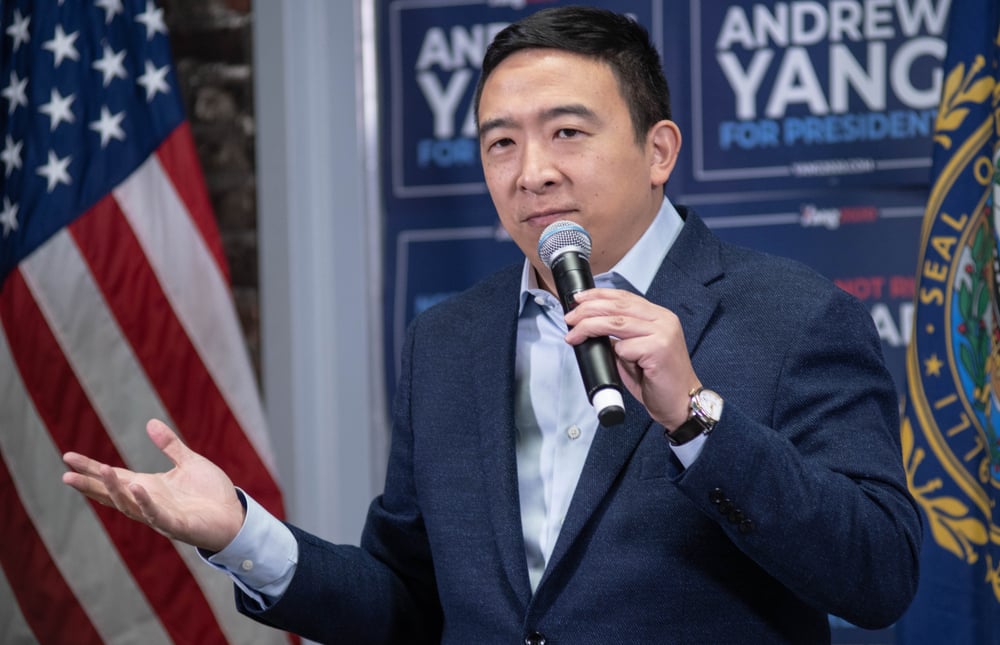
Andrew Yang: AI Revolution Accelerates Beyond Expectations
The Acceleration of AI and Its Impact on the Workforce
Artificial intelligence (AI) is transforming the way we work, and according to tech entrepreneur Andrew Yang, the changes are happening faster than most people anticipate. Yang, founder of the Forward Party and former presidential candidate, recently shared his insights with CNBC about the rapid pace of AI development and its implications for the labor market.
Yang described his recent experience at an AI conference in the western United States, where he was struck by the speed of progress. “Holy cow! They said to me that what we’re going to see in the next six months outstrips what we’ve seen in the last ten years,” he said. This acceleration is already reshaping how work gets done, and it’s prompting serious questions about the future of employment.
Rethinking the Tax System in an Automated Economy
One of the key concerns Yang raised is whether the current tax system is suitable for an economy increasingly driven by automation. He explained, “You tend to tax things that you want to discourage, that you want less of.” As automation becomes more prevalent, taxing labor becomes harder to justify. This shift could lead to significant changes in how companies allocate resources and manage their workforce.
Yang pointed to a growing trend in hiring disruptions. “The easiest people to fire are the people you haven’t hired yet,” he said. This sentiment reflects a weakening demand for recent graduates, with unemployment rates among college graduates now matching or even exceeding those of non-college graduates.
Real-World Examples of AI-Driven Changes
Several tech companies have already begun adjusting their strategies in response to AI advancements. For instance, enterprise software company Atlassian Corp. recently cut around 1,600 jobs this month to self-fund further investment in AI and enterprise sales. This move highlights the growing emphasis on AI as a core component of business strategy.
Yang also referenced Dario Amodei, CEO of Anthropic, who has warned that up to 50% of entry-level white-collar jobs could be automated in the coming years. Amodei has supported the idea of taxing AI companies, a stance that Yang believes is becoming increasingly relevant.
The Rise of AI Tools and Their Economic Implications
Yang highlighted an unnamed company that sells autonomous coding tools to large enterprises. According to him, the company’s revenue has increased by 100 times in the past 12 months. If this growth continues, companies may start directing more of their technology budgets toward AI tools rather than human engineers.
“This transition is not going to be rough for millions of people,” Yang warned. He emphasized that the impact of AI on the labor market is part of a broader transformation that could challenge the stability of traditional employment models.
The Social Contract and the Future of Work
Yang described the current situation as a fracture in the implicit social contract that many people associate with the American way of life. He questioned whether work will still provide the stability people expect, especially as automation continues to reshape industries.
He also noted the significance of Amodei’s support for taxing AI companies. “Since when does the CEO of a major company raise his hand and say, ‘Hey, tax me and mine’?” Yang asked. This shift in perspective reflects growing concerns about job losses and potential backlash from workers affected by AI-driven changes.
Preparing for the Future
As AI continues to evolve, it’s clear that the workforce must adapt to these changes. Companies, policymakers, and individuals will need to rethink traditional approaches to employment, taxation, and economic planning.
For now, the message from Yang is clear: the AI boom is coming faster than expected, and the next six months could bring more change than the last decade. The question is no longer whether AI will disrupt the workforce, but how society will respond to these challenges.
